Advanced Injury Treatment Center Blog
 

Main menu:

Site search

Categories

May 2012
M T W T F S S
« Jan    
 123456
78910111213
14151617181920
21222324252627
28293031  

Tags

Blogroll

Hamstring Injuries

Over the last few months I have seen an increasing number of hamstring injuries which has inspired to me write this blog. Hamstring pulls or strains are one of the most common sports-related injuries. The hamstring, a group of 4 muscles in the back of the thigh, can be felt stretched as you bend forward to touch your toes. Three of the four hamstring muscles, the semitendonosis, semimembranosis, and long head of the bicep femoris, cross both the hip and knee joint and are true hamstring muscles. At the top, these muscles have a common attachment to the ischial tuberosity (a bone at the bottom of the pelvis), and at the bottom these muscles attach to the tibia and fibula (bones below the knee). The other hamstring muscle, the short head of the bicep femoris, only crosses the knee joint.

There are two main types of hamstring injuries, and each affects a different part of the hamstring group. The injury I most often see in my clinic is a strain that occurs at the tendinous insertion on the ischial tuberosity at the pelvis. This commonly occurs in tri-athletes, and marathon runners who will complain of pain in the lower buttock region that increases with sitting and when the injured leg strikes the ground. The second type is more in younger athletes is caused by a sudden motion, such as an explosive sprint, jump, or a kick. In this type of injury, the strain occurs at the muscular portion of the hamstring, resulting in pain, swelling, and bruising in the middle of the back of the thigh.

An understanding of the biomechanics of running makes it easier to understand how these injuries occur and how to prevent them. There are two phases of running: the stance phase and the swing phase. The stance phase consists of foot strike, mid stance, and toe off; and the swing phase consists of follow through, hip flexion and leg descent. During the eccentric contraction, muscle fibers will slowly elongate to slow down a particular motion, while a concentric involves shortening of the muscle fibers to lift an object or move a limb in a particular direction. During leg descent and foot strike, the pelvis flexes forward and the leg extends, the hamstring muscles are eccentrically contacted to slow both of these particular movements. When the eccentric load exceeds the strength of the muscle fibers, tearing of the hamstring fibers occurs, resulting in a strain injury.

The Advanced Injury Treatment Center utilizes a comprehensive treatment approach to hamstring injuries. Deep tissue procedures including Active Release technique and Graston Technique are used to free up soft tissue motion of the hamstrings and surrounding musculature. Implementation of proper strength and flexibility training of the hamstring musculature and the nearby muscles surrounding the pelvis and thigh will reduce the risk of injury. Focus on strengthening the abdominal and gluteus maximus musculature is important in the prevention of a hamstring strain because these muscles aid the hamstrings in decelerating flexion of the pelvis during heel strike. Flexibility of the hip flexors and low back musculature is also important in the prevention of a hamstring strain injury. Tight hip flexors and low back musculature causes excessive flexion of the pelvis during foot strike placing increasing strain on the hamstrings. Tightness in these muscles also inhibits strengthening of the gluteus maximus and abdominal musculature. Advice on how to progress training runs more appropriately also aids in reducing the risk of injury.

Chronic Injuries – It’s never too late

Chronic pain and chronic injuries can make an individual feel like they are always going to be limited in the types of activities they can comfortably participate in on a regular basis.  I can’t say how many times I have heard someone say, “I used to play tennis 3-4 times per week, but now I can only play golf  because my knees just can’t take it anymore”.

This line of thinking has become the standard for how most people deal with chronic injury or chronic pain.  Avoidance therapy is certainly an easy answer when a person is in pain, but experience has shown that it’s never too late to do something about chronic injury or pain.

Most times, the avoidance of an activity will cause the area in question to weaken over the course of time mainly because of disuse.  This can complicate the issue because now the person loses some of the range of motion, stability and ultimately the strength of that area.  Rather than avoiding the activity, a person should try to work around the injury by working with the right professional and either modifying the movement or performing a series of pre and post activity exercises to “warm-up” the area before activity.

In addition, there are many soft-tissue techniques that can help kick start the healing process in an area by increasing local blood flow, breaking down old scar-tissue and stimulate the growth of new, more pliable and stretchy connective tissue.  One technique that has been proven effective in treating chronic injury is Graston Technique (GT).  GT is an advanced soft-tissue mobilization therapy which relies on the use of 6 stainless steel instruments to effectively break down scar tissue and stimulate the healing process in an area.

This technique has revolutionized the way chronic injuries are now treated.  Recently I had a patient come into the office with an 8 year history of frozen shoulder, or adhesive capsulitis.  After 11 sessions of GT, the patient had gained 80% of her range of motion and had full strength which allowed her to play tennis again for the first time in 8 years!!

So it’s never too late to deal with chronic injury.  For more information about GT, please visit their website and see a short slideshow that illustrates how this technique can help get you moving the way you were designed to move.

GT: www.grastontechnique.com

Hydration

A frequent question that I am asked by athletes  during physical therapy sessions is how much water should I be drinking to stay hydrated?  It seems like a simple question but there is no easy answer.  Studies have produced varying recommendations over the years, but in truth, your water needs depend on many factors, including your health, how active you are and where you live.

Water is the largest constituent of the human body.  It accounts for more than 60% of the human bodies volume.  Lack of water can lead to dehydration, a condition that occurs when you don’t have enough water in your body to carry out normal functions.  Dehydration, is defined by 2% loss of water weight which results in decreased muscle strength, endurance, and mental aquity. 

The overwhelming consistent conclusion across multiple research studies, academic societies and training associations is that dehydration can signficantly impact athletic performance.  The American College of Sports Medicine and National Athletic Trainer’s Association recommend 24 hours before exericise 400-600 ml should be consumed(approximately 6-10 oz) .  During exercise, active individuals should consume approximately 150-350 ml (6-12 oz) of fluid every 15-20 minutes.  If exercise is of long duration usually greater than an hour or 75 minutes or occurs in a hot enviroment, sports drinks containing carbohydrate and sodium could be used. 

Newer research is also finding that adding just a a small amount of protein to your post-exercise  glucose-electrolyte solution not only enhances hydration  and rehydration but also promotes muscle recovery and reduces muscle damage. 

In conclusion,  if you wish to perform at your highest level you must understand how to stay hydrated and rehydrate after exercise.  This is a vital component of your event prepration and often makes the difference between a high level performance and a complete disaster!  We strive to educate our patients at the Advanced Injury Treatment Center on all aspects of health and wellness including sport’s nutrition, injury prevention, to pre-event preparation.

Ice vs. Heat – Which is Best?

One of the most common questions I hear on a weekly basis is, “Should I use heat or ice when it hurts?”  This is a very common dilemma that most people face when they are in pain.  The use of heat and ice can provide great benefit but only when used in the right situations.  So, here’s a general guideline to help you answer that question the next time you feel pain.

Heat is often a better choice when dealing with symptoms that involve stiffness and tightness.   The reason heat works well in this situation is because its effects on circulation.  The use of heat will INCREASE circulation to an area.  More blood flow = more oxygen and nutrients delivered to the area in question & more waste products removed from the area in question.  Think about the last time you took a long hot shower or relaxed in a sauna.  Within minutes, you tend to feel looser and more relaxed which is always the right choice when dealing with stiffness, tightness and an overall decrease in range of motion.

Ice, on the other hand, is a better choice when dealing with symptoms that involve swelling, inflammation or acute pain.  The reason ice works well in this situation is also because of its effects on circulation.  However, the effect on circulation is the EXACT OPPOSITE to that of heat.  Ice causes a DECREASE in circulation which is important during the onset of injury because it helps to regulate inflammation.  Inflammation is the body’s normal response to injury but often times it can result in moderate swelling and pain.  I always remind my patients that ice puts out the fire.  Ice is a great choice during the first 48 hours and will help decrease pain and swelling while the body undergoes the healing process.

Regardless of the choice between heat or ice you want to make sure you never apply them for more than 20 minutes.  More often than not, people will use heat or ice under the right circumstances but the mistake that is made is keeping it on the body for hours instead of minutes.  Prolonged exposure to heat or ice for more than 20 minutes can have the reverse effects.  This can lead to an increase in pain or stiffness or inflammation depending on the situation.

So remember, use heat when you are experiencing tightness and stiffness and when an injury is chronic BUT use ice during the first 48 hours of an injury to help put out the flames of inflammation.  If you’re not sure of whether you should use heat or ice the next time you are in pain, then contact your local healthcare professional at AITC to make the right choice.

Tennis Injuries – A Detailed Look Into Tennis Elbow

Tennis elbow is a common condition that affects most tennis players at some point in their playing career.  Some may only experience mild cases while others may be forced to stop playing for sometimes months or years at a time.  So what is this mysterious condition which seems to plague players from the newbie to the professional?

tennis elbowFirst of all, the condition of tennis elbow is also called lateral epicondylitis which is an inflammation of the common extensor tendon that attaches to the outer part of the elbow (lateral epicondyle).  This condition can happen as a result of a macrotrauma or microtrauma.  Most patients fall under the 2nd category which is another way of saying it’s a repetitive stress injury or RSI.  RSI’s usually develop as a result of performing a repeated action to an area that may not be conditioned well enough to handle the load or stress from that repeated action.

In mild cases of tennis elbow, patients will usually be able to experience relief of symptoms with rest, ice, compression and support through either a brace or elbow wrap.  However, most patients will often develop an increase in symptoms that may be present even when they are not playing tennis.  Perhaps they notice difficulties with activities of daily living like brushing their teeth, or reaching into the refrigerator for milk or even shaking a person’s hand! It’s during these situations where it is important to look at the big picture on what CAUSES tennis elbow.

If the inflammation of the extensor tendon (forearm extensor muscles) is the problem, then what causes that tendon to become inflammed in the first place?  The answer usually requires a fair amount of detective work to figure out what the greatest contributor may be to cause the inflammation in the first place.  For example, the overload on that tendon may be coming from a weakness in the area, a lack of flexibility, joint space compromise (bone spurs, worn cartilage), rotator cuff or shoulder muscle imbalance and not mention the racquet and technique component.  Things like improper grip size, racquet weight, racquet balance,racquet head size,  string type, string tension AND swing technique can also play a major role in the complexity of tennis elbow.  Of course, we can’t forget the biochemical component as well.  Lack of proper hydration and a poor diet can also affect the healing rate of the tendon as well as how the inflammatory cycle is regulated for that person.  Diet can determine whether or not chemical reactions in the body are happening at an excessive rate or not happening at all.

Therefore, it is important to look at tennis elbow in three ways – the physical component, the equipment component and the biochemical component.  The greatest results in managing this condition will usually come when all three areas are investigated and treated for optimal results.  For example, someone with tennis elbow may not experience full relief unless they properly stretch and strengthen their elbow and shoulder – modify their equipment and stroke to improve the efficiency of movement and reduce the likelihood of improper elbow loading – and tweak their diet to properly hydrate their body and fuel their muscles with protein to control the inflammatory cycle.  Only then will a person reach their best results.

Often times, a person dealing with tennis elbow may feel like they will never be able to play the sport they love because of the chronic nature of this condition.  However, it’s never too late to have your elbow, equipment and nutrition assessed by the proper professionals to see if perhaps previously attempted treatments failed because the treatment only focused on the physical aspect only.  Personally, I have treated hundreds of elbow complaints and I always reach the best results once we properly manage all three components.

So, the next time you feel that twinge or ache in your elbow after a few sets of tennis – think about what you can do to improve the three areas we mentioned above.  Then think about how much fun the sport of tennis could be if you never had to worry about whether or not your elbow was going to “act up” on you.  The game of tennis gives you plenty to think about without you having to worry about elbow pain.  Stop living with the pain and visit your local tennis professional and local sports injury clinic like Advanced Injury Treatment Center to help you get back to the court quickly and without that nagging pain in your arm.

Thinking Outside the Box

In the last couple of weeks, I have seen several patients come into the office that were presenting with pain of 2-3 years and longer in duration.  In addition, most of these patients have had countless treatments during that time which never brought the type of relief that they were looking for.  So when they are sitting in front me I have to ask the question, “Is the SITE of pain the same as the SOURCE of pain?”

Often times, we become fixated on where the pain is – not just as patients but even as practitioners.  Before you know it, it becomes easy to fall into the trap where we do not allow ourselves to think that the pain may be caused by an area other then where it hurts.  So the question then presents itself once again, “Is the SITE of pain the same as the SOURCE of pain?”

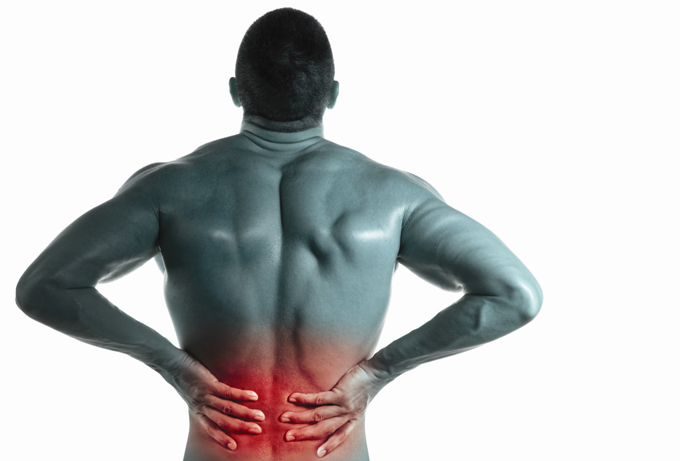
Recently, I had a client come to the office who had been experiencing chronic back pain for almost 2 years.  During that time, he had undergone various treatments including chiropractic, physical therapy, and two series of cortisone injections which provided temporary relief for weeks at a time, but never anything longer than that.  In that time, he had grown frustrated with the lack of results he was looking for and had become used to the fact that his back pain would be something he would just have to live with – how many times have we heard that scenario?

Ultimately, he found his way to our office after being told about some of the work we provide that blends the disciplines of chiropractic and physical therapy.  During the consultation, it was clear that anything and everything that should have been done to treat his back was done properly.  However, during his examination it was clear that he had some significant muscle imbalances in his hips and legs.  When asked if anyone of his previous practitioners had evaluated his hips he stated, “no.”  While testing his hips, we were able to reproduce his back pain which surprised him at first, but then he realized that it made perfect sense given the nature of his work which requires him to sit for several hours at a time.  Needless to say, when we reviewed his history in further detail he stated that his back pain started within a month of starting a new job that had him sitting all day instead of moving frequently like his former job.

When all was said and done, we established a treatment plan that focused on his hips and not his back.  Instead of back exercises and back stretches we utilized hip exercises and hip stretches.  I will never forget the look on his face during the first appointment when he looked at me and said, “Something tells me that you are onto something.”  After two days of doing his home rehab exercises he e-mailed me to thank me for thinking outside of the box.  I told him that all I did was listen to what he said and that it wasn’t likely that his back pain was only caused from his back but rather another region.

So in the end, this patient learned a great lesson about how the body can sometimes deal with underlying problems.  Even though you feel pain in one particular area of the body, whether it’s acute or chronic, you must always consider the possibility that the site of pain may not always be the source of pain.  Especially when you have exhausted multiple treatment options that did not give you the results you were looking for.

At AITC, we will take the time to listen to your story and help you find the source of your pain and not just treat the symptoms.  It’s a simple approach, but it works.  If you feel that you are like the patient in this story then give us a call and let us help you feel better and get you back to the lifestyle you deserve!

Pounding the Pavement – Become a Better Runner

Have you ever wondered why some people look like they are gliding when they run and others seem to hit the ground so hard it sounds like an oncoming stampede?  The answer lies in your shoes, literally.  Newton’s third law of motion tells us that for every action there is an equal and opposite reaction.  Every time your foot hits the ground, which is roughly 800 times per mile that force must travel through your whole body.  It estimated that a 150-pound runner will expose their feet to a total impact of 150 tons in just 3 miles!  Therefore, appropriate shoe selection is paramount for any long-distance runner.

Adequate cushioning will help reduce the stress from impact whereas motion control will assure proper foot and ankle mechanics while running.  Wearing the wrong type of shoe can often be a major contributing factor in several running injuries such as plantar fasciitis, runner’s knee, IT band syndrome and more.  Shoe choice should be determined by certain factors such as your foot type, body type, running surface and mileage.

There are three foot types that most runners will fall into depending on the degree of their pronation – neutral pronator, over-pronator and under-pronator or supinator.  Pronation is frequently misunderstood and is defined as a normal inward rolling of the foot which helps to absorb shock and spring load the foot just before the toe-off phase of your gait.  If you fall into the first category, then chances are your foot is doing a good job absorbing shock and moving correctly during your stride.  A runner that falls into either the over-pronator or an under -pronator category is usually not absorbing shock properly and are subsequently not able to have a normal biomechanical transfer of weight from their heels to their toes.  Furthermore, the degree of pronation that your foot undergoes can actually change over the years and with certain body changes such as weight gain and weight loss.

Training tip of the month: Whether you are new to running or have been running for years, it is important to have your gait and foot type evaluated by a professional.  Take the time to stop by your local running store such as Runner’s Alley (www.runnersalley.com) and within minutes you will learn what foot type you have and which shoe will help provide the proper balance between cushioning and motion control.  Also, remember to change your shoes every 350-450 miles as most shoes lose roughly 50% of there shock absorbing ability by that mileage.

So the next time you lace up your shoes, ask yourself if you are running like the wind or simply pounding the pavement.

Welcome to the AITCNH Blog

On behalf of the entire staff at Advanced Injury Treatment Center, we would like to welcome you to our blog page.  In the coming weeks, we will be providing articles on topics such as injury prevention, nutrition for optimal recovery, training tips, ergonomic recommendations and much, much more!

In addition, we will be providing you with updated information on some of the exciting changes taking place at AITC.

We look forward to your valuable input and feedback and will make our best effort to provide you with the information you need to reach your optimal health and wellness.

Thank you.

Sincerely,

The Staff at AITC

Advanced Injury Treatment Center